window.dataLayer = window.dataLayer || []; function gtag(){dataLayer.push(arguments);} gtag('js', new Date()); gtag('config', 'AW-17012968158');

Tantra and the Chakra System: Awakening Energy, Love and Awareness

In Tantra, the chakra system is a practical map of embodied awareness.

Chakras are often described as “energy wheels” along the spine, a traditional image that points to the movement of energy through the body.

This article explores the chakra system in a simple and grounded way: as a way to notice how energy moves, where we feel open, where we feel blocked, and where more awareness may be needed.

Through Tantric practice, this map becomes a direct experience in the body.

Like any good map, the chakra system helps us find our way back to the body, to presence, and to a deeper connection with life.

You’ll discover:

What are Chakras?

In Tantra, the chakra system can be understood as a practical tool for self-inquiry.

The seven main chakras are traditionally located along the central axis of the body, from the base of the spine to the crown of the head. Each chakra points to a different dimension of human experience: grounding, pleasure, vitality, love, expression, intuition and spiritual connection.

They can be approached as living points of connection between body, emotion, energy and consciousness.

This gives language to experiences that are often difficult to name: the feeling of being rooted or unstable, open or protected, expressive or silent, connected or disconnected.

Illustration of the seven chakras in Tantra, showing the Root, Sacral, Solar Plexus, Heart, Throat, Third Eye and Crown chakras aligned along the body.

Kundalini and Life Force

In many Tantric traditions, kundalini is described as a dormant energy resting at the base of the spine. It is often symbolised as a coiled serpent.

This image points to our life force: the energy of aliveness, creativity, sexuality, emotion, presence and spiritual longing.

  • When this energy moves through the body without awareness ► it can become reactive, unconscious or overwhelming.

  • When awareness is present ►the same energy can become more grounded, integrated and alive.

In Tantric practice, life force is explored through the body. This may include breathwork, movement, sound, meditation, conscious touch, partner exercises and guided awareness practices.

The chakra system helps us observe how this energy moves through different layers of experience ► from grounding and pleasure to love, expression, intuition and stillness.

The Seven Chakras

The seven main chakras can be understood as a spectrum of human experience, moving from the most grounded aspects of life to the most subtle.

Like the colours of the rainbow, each chakra carries a different quality. Together, they form a fuller harmony.

The image below offers a simple body map of the seven main chakras, showing their location, colour, and name.

Illustration of the seven chakras in Tantra, showing the Root, Sacral, Solar Plexus, Heart, Throat, Third Eye and Crown chakras aligned along the body.

Chakra Meanings & Simple Practices

Click on each section to explore the chakra’s meaning, location, color, element, mantra, reflection, and simple practice:

  • 1. MULADHARA ○ Root Chakra

Location: Base of the spine │ Element: Earth │ Colour: Red │ Mantra: LAM

Muladhara connects us with the physical body, our basic needs, and the feeling that we have a place in the world. In Tantra, the root chakra is important because energy needs a foundation: without grounding, spiritual practice can become disconnected from real life.

Tantric reflection:
Can I feel my body as a safe place to return to?

Simple practice:
Stand or sit with your feet connected to the ground. Breathe slowly into the lower belly and pelvic floor. With each exhale, feel your weight being supported by the earth.

  • 2. SVADHISTHANA ○ Sacral Chakra

Location: Lower belly | Element: Water | Colour: Orange | Mantra: VAM

Svadhisthana is connected with emotion, sensuality, pleasure and creative flow. Like water, it teaches movement, adaptation and the ability to feel without immediately controlling what arises.

In Tantra, the sacral chakra is often associated with sexual energy, but it is not only about sexuality. It is also about our capacity to receive, to soften, to express emotion and to allow life to move through the body.

Tantric reflection:
Do I allow myself to feel pleasure without immediately judging, controlling or suppressing it?

Simple practice:
Place your hands on your lower belly and breathe gently into this area. Allow the pelvis to move slowly, without forcing. Notice any sensations or emotions that arise, and let them be present without needing to change them.

  • 3. MANIPURA ○ Solar Plexus Chakra

Location: Above the navel | Element: Fire | Colour: Yellow | Mantra: RAM

Manipura is connected with vitality, confidence, direction and personal power. It relates to how we act in the world, make choices and stand in our own energy.

In Tantra, power is not about control or domination. It is the ability to be present with our life force and use it consciously. This chakra supports healthy boundaries, self-worth and the courage to move from intention into action.

Tantric reflection:
Where do I give away my power, and where do I try to control too much?

Simple practice:
Place one hand above your navel. Breathe into this area and imagine a warm flame growing steadily — not burning out, not exploding, simply becoming bright and clear.

  • 4. ANAHATA ○ Heart Chakra

Location: Centre of the chest | Element: Air | Colour: Green | Mantra: YAM

Anahata is connected with love, compassion, intimacy and emotional openness. It is often seen as a bridge between the lower chakras, related to body and instinct, and the higher chakras, related to expression, intuition and consciousness.

In Tantra, the heart is essential because awareness without love can become dry, and desire without heart can become disconnected. This chakra supports our capacity to meet ourselves and others with tenderness, honesty and presence.

Tantric reflection:
Can I stay connected to my heart while feeling desire, fear, vulnerability or longing?

Simple practice:
Bring both hands to the centre of your chest. Breathe as if the breath could move in and out through the heart. You may silently repeat: I am here. I am willing to feel.

  • 5. VISHUDDA ○ Throat Chakra

Location: Throat | Element: Ether / Space | Colour: Blue | Mantra: HAM

Vishuddha is connected with communication, expression and authenticity. It relates to the ability to speak honestly, listen deeply, express needs and name boundaries with clarity.

In Tantra, the throat chakra is important because intimacy requires truth. When expression is blocked, we may suppress emotions, hide desires or avoid difficult conversations. When this chakra is more open, communication can become part of the practice itself: honest, kind and embodied.

Tantric reflection:
What truth have I been holding back from myself or from others?

Simple practice:
Take a few slow breaths and allow a gentle sound to emerge on the exhale. It does not need to be beautiful. Let the sound vibrate through the throat and chest, noticing what wants to be expressed.

  • 6. AJNA ○ Third Eye Chakra

Location: Between the eyebrows | Element: Light | Colour: Indigo | Mantra: OM

Ajna is connected with intuition, perception and inner vision. It relates to our ability to observe what is happening beneath the surface — in ourselves, in others and in life.

In Tantra, the third eye supports the capacity to witness. We begin to notice patterns, emotions, reactions and subtle movements of energy without being completely identified with them. In this sense, intuition becomes less dramatic and more precise: a quiet form of seeing.

Tantric reflection:
Can I observe my experience without immediately judging it?

Simple practice:
Close your eyes and bring attention to the space between the eyebrows. Breathe gently. Notice thoughts, sensations and images passing through awareness like clouds in the sky.

  • 7. SAHASRARA ○ Crown Chakra

Location: Top of the head | Element: Pure consciousness | Colour: Violet / White | Mantra: Silence

Sahasrara is connected with stillness, unity and spiritual connection. It represents the opening beyond the separate self — the sense that life is not only personal, but part of something larger.

In Tantric symbolism, this is where Shakti, the energy of life, meets Shiva, pure consciousness. It is the union of movement and stillness, body and spirit, energy and awareness.

Tantric reflection:
Can I rest, even for a moment, in the mystery of being alive?

Simple practice:
Sit quietly after meditation, movement or conscious intimacy. Let the breath become natural. Do not try to create an experience. Simply rest in awareness.

Sexual Energy in Tantra

Sexual energy is part of Tantra, but it is not the whole of Tantra.

In Tantric practice, sexuality is not approached as an isolated act. It is connected with the whole body: safety, pleasure, power, love, expression, intuition and presence.

Tantra expands sexuality from a single act into a full-body experience — where instinct, pleasure, emotion, love, voice, intuition and spirit can all be included.

This is where the chakra system offers a useful perspective. It helps us see when sexual energy is moving through the body — and when it gets stuck in old patterns.

  • If there is no grounding:

    ► sexual energy may feel unstable.

  • If there is shame:

    ► pleasure may become restricted.

  • If there is no heart connection:

    ► desire may feel disconnected from love.

  • If there is no communication:

    ► intimacy may lack trust.

  • If there is no awareness:
    ► energy may remain unconscious.

With practice, sexual energy can become less automatic and more connected: to the body, to the heart, and to the whole of our experience.

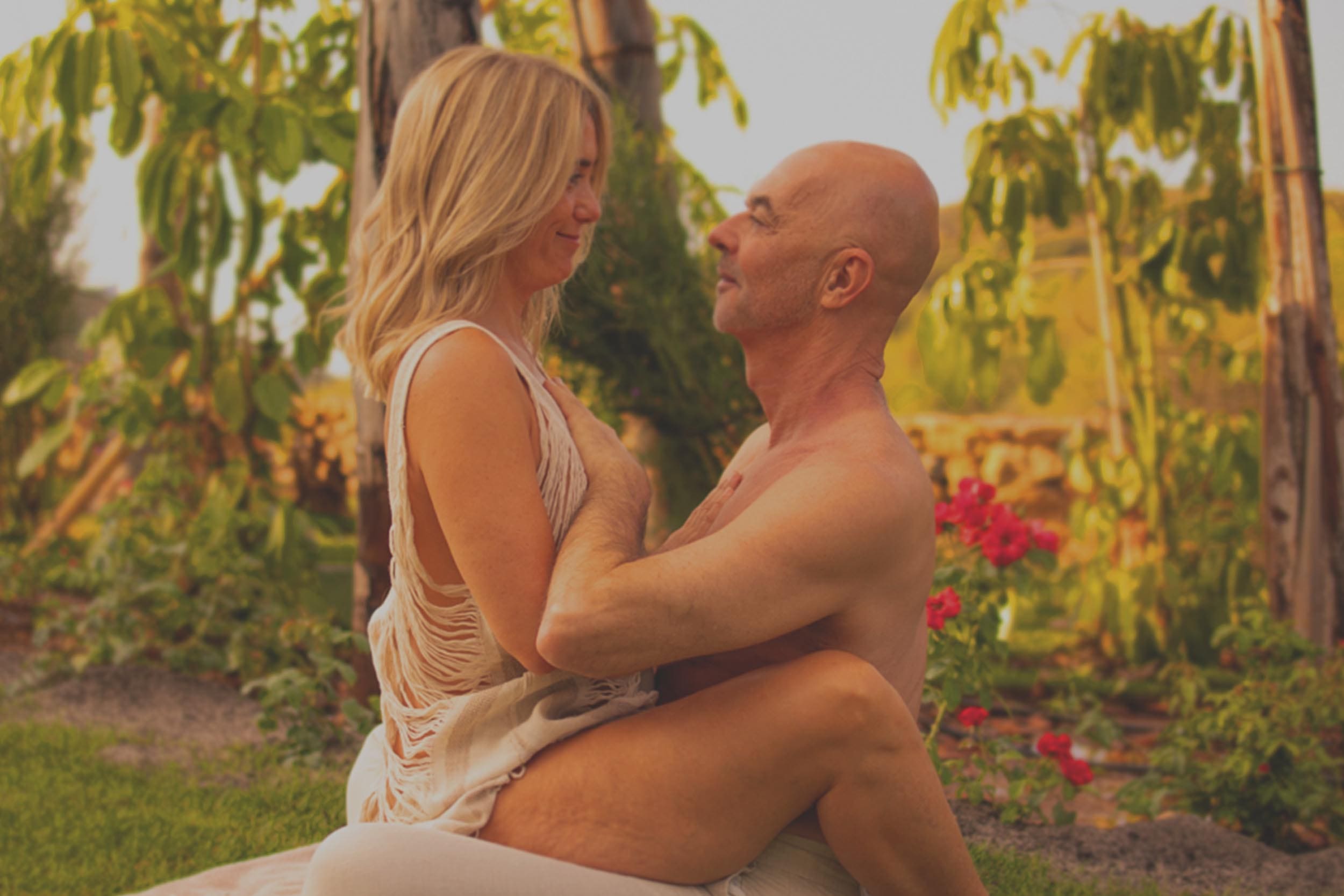
A serene couple practicing tantric intimacy through eye contact and gentle touch, symbolizing deep connection, mindfulness, and sacred sexuality.

Chakras and Emotional Patterns

The chakra system can also help us observe how emotional patterns live in the body.

When one area of experience feels blocked — safety, pleasure, power, love, expression, intuition or spiritual connection — it may show up as tension, protection, disconnection or repeated emotional patterns.

Sometimes, healing begins by noticing what the body has been trying to say.

These patterns are not fixed labels, but invitations to listen more closely. For example:

Affected Chakra Possible Emotional Patterns
1) Root  Fear, insecurity, lack of grounding
2) Sacral  Shame, guilt, difficulty receiving pleasure
3) Solar Plexus  Low confidence, anger, lack of direction
4) Heart  Grief, protection, fear of intimacy
5) Throat  Silence, suppression, unclear boundaries
6) Third Eye  Confusion, disconnection from intuition
7) Crown  Isolation, lack of meaning, spiritual disconnection
A couple standing face-to-face with parts of their faces and bodies as mirrors, representing how relationships reflect wounds and inner child dynamics.

For a deeper exploration of how inner patterns can become visible through intimacy and connection, you may also read our article: Tantra Healing Mirrors, Sexual Energy and Inner Dynamics.

From uncertainty to inner peace: tantra invites a grounded, embodied presence where trust and calm emerge beyond external circumstances.

Final note

We hope this article has helped make the chakra system feel clearer, simpler and more connected to real experience.

At the Connective Tantra School, we bring ancient Eastern wisdom into a form that Western people can explore through the body, relationship and daily life.

This is also the heart of our Tantra workshops: learning through direct experience, with presence, care and curiosity.

Ready to dive in?

Explore our Workshops, Sessions & Trainings
and begin the path of Healing, Empowerment,
and Sacred Connection.

Go to Top